
gentle books » Non Fiction
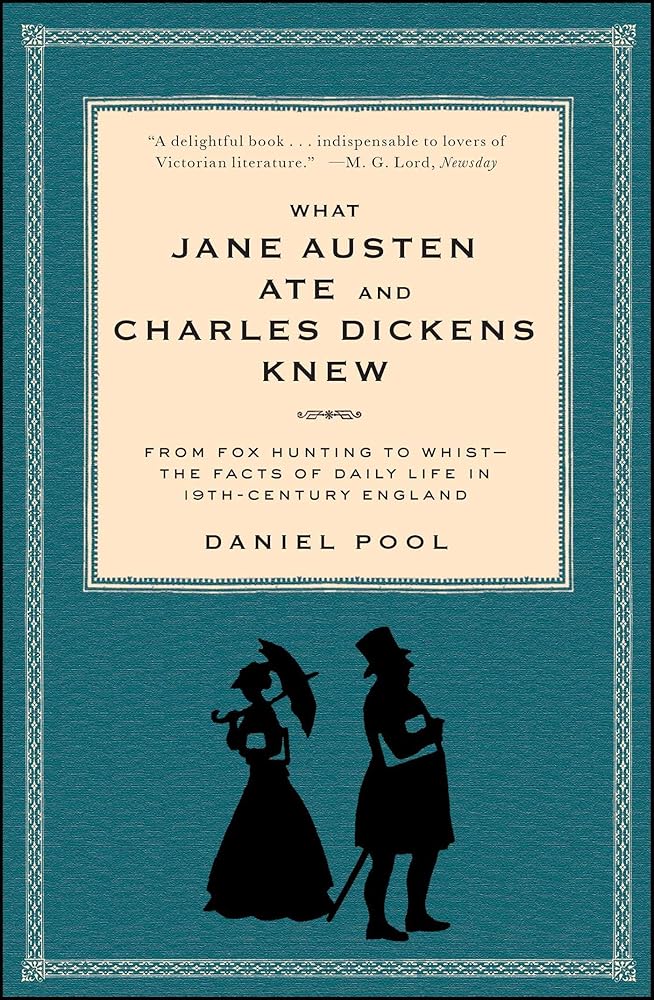
What Jane Austen Ate and Charles Dickens Knew: From Fox Hunting to Whist-the Facts of Daily Life in Nineteenth-Century England
1994
couldn't load pickup availability
paperback | used, good
A “delightful reader’s companion” (The New York Times) to the great nineteenth-century British novels of Austen, Dickens, Trollope, the Brontës, and more, this lively guide clarifies the sometimes bizarre maze of rules and customs that governed life in Victorian England.
For anyone who has ever wondered whether a duke outranked an earl, when to yell “Tally Ho!” at a fox hunt, or how one landed in “debtor’s prison,” this book serves as an indispensable historical and literary resource. Author Daniel Pool provides countless intriguing details (did you know that the “plums” in Christmas plum pudding were actually raisins?) on the Church of England, sex, Parliament, dinner parties, country house visiting, and a host of other aspects of nineteenth-century English life—both “upstairs” and “downstairs.
An illuminating glossary gives at a glance the meaning and significance of terms ranging from “ague” to “wainscoting,” the specifics of the currency system, and a lively host of other details and curiosities of the day.
share
about delivery & pick-up
we offer the following delivery options:
- domestic shipping
- SF Express pay-by-receiver, and
- local pick-up.
pick-up options are limited to book orders at the moment. if you select local pick-up (books only) at checkout, you can pick up your books at our next event! we'll be in touch to confirm your pick-up details.

about gentle books
gentle books hopes to build a circular book economy and nurture the community of readers here in Hong Kong.
a women-led business founded by book-lovers, the brand believes that books don’t belong in landfill - books deserve to be read! gentle books is a social enterprise that commits 20% of its profits to literacy and education-based NGOs.